Pico Island Cruises and Boat Tours
Pico Island cruises and boat tours explore one of the Azores’ strongest whale-watching destinations, where Atlantic wildlife, volcanic coastline and a deep maritime heritage come together around Lajes do Pico and Madalena.
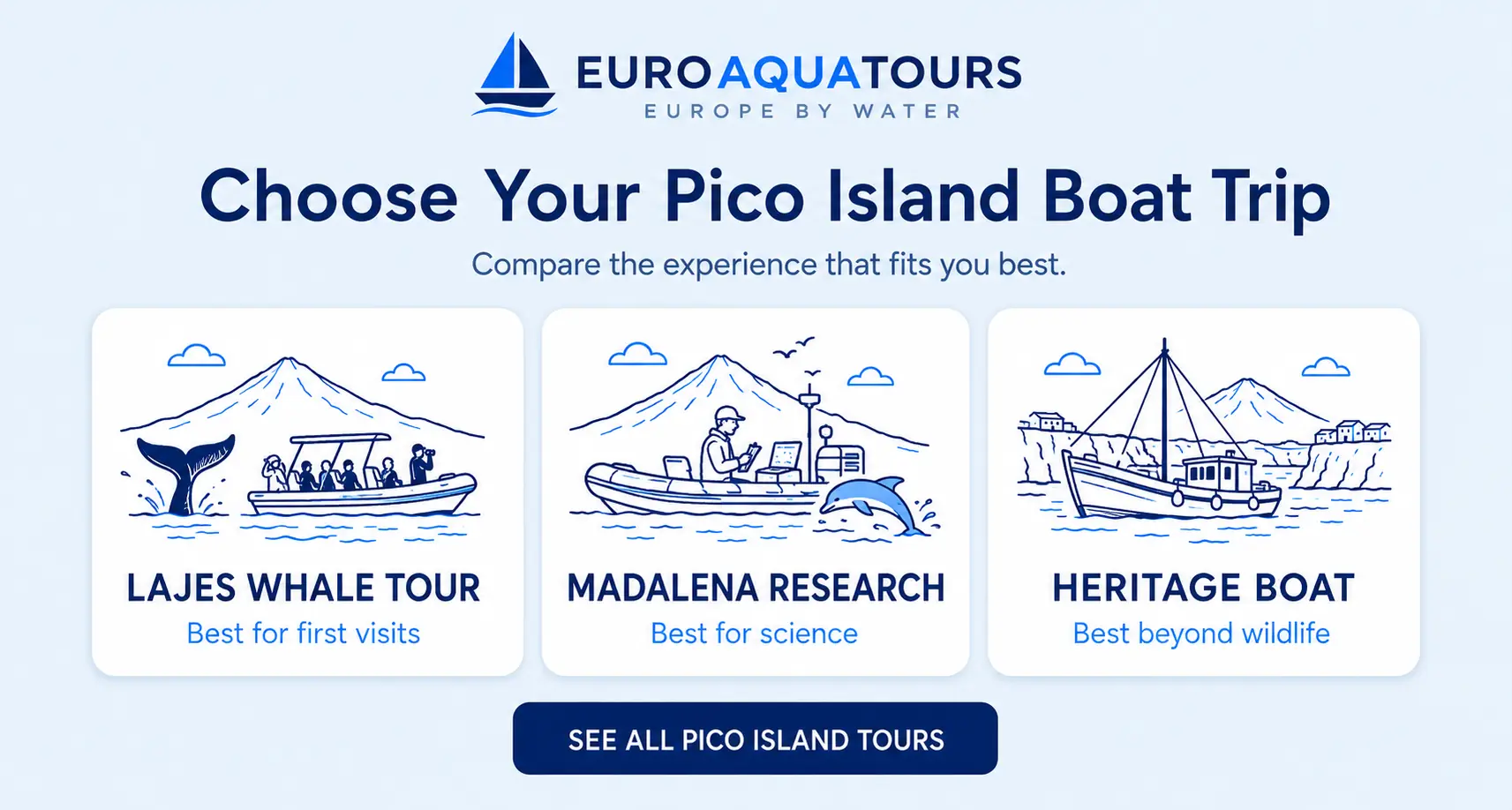
The main choices are genuinely different. Lajes is the island’s strongest dedicated whale-watching base, Madalena offers a research-led expedition and convenient Central Group ferry connections, while the eastern coast also has a short heritage experience aboard a boat connected with Pico’s historic whaling culture.
EuroAquaTours helps you choose the best Pico Island boat tour for your trip by comparing departure harbour, wildlife focus, boat type, research value, maritime heritage and Atlantic conditions before you book.
Plan Your Pico Island Boat Trip
EuroAquaTours Quick Verdict
For most first-time visitors whose main goal is whale watching, start in Lajes do Pico. The town has Pico’s strongest concentration of dedicated whale and dolphin watching experiences, a deep connection with the island’s whaling history and several current guided options of roughly two-and-a-half to three hours.
Choose Madalena when a research-led expedition is especially appealing or when staying on the island’s western side makes the harbour much more convenient. The current Madalena expedition places a marine researcher or biologist aboard and links tourism with ongoing cetacean monitoring.
Choose the Memória Baleeira heritage ride when whales are not the only reason you want to be on the water. It is a much shorter coastal experience built around Pico’s maritime history and views of the island from the sea.
For wider island selection, see our Azores cruises and boat tours guide.
Most important Pico decision: choose the departure base before comparing ratings or price. A Lajes wildlife expedition, Madalena research trip and heritage boat from Calhau are different experiences even though all appear under the broader Pico Island boat-tour market.
Start Here: Find Pico Island Boat Tours
Use the live options below to compare current Pico whale watching, dolphin tours, research expeditions, heritage boats and other water experiences.
Good options to explore: Lajes do Pico whale watching, Madalena research expeditions, Zodiac wildlife tours and traditional maritime experiences.
Check the meeting island carefully: broad Azores marketplace categories can occasionally surface water activities from another island. Confirm that the meeting point is actually on Pico before payment.
Not Sure Which Pico Island Boat Tour to Book?
Choose the three-hour whale watching experience from Lajes do Pico if this is your first Pico boat trip. It gives you the clearest combination of wildlife searching, marine interpretation, the island’s whale-watching identity and meaningful Atlantic boat time.
Choose the Madalena research expedition when scientific interpretation is the main attraction. Choose the shorter Zodiac alternative when you prefer a faster, more exposed boat style, or Memória Baleeira when maritime heritage matters more than actively searching for cetaceans.
Best Pico Island Boat Tours at a Glance
- Best overall: Whale Watching Experience from Lajes do Pico
- Best research-focused option: Madalena Research Whale and Dolphin Expedition
- Best fast wildlife ride: Azores Whale and Dolphin Watching on a Zodiac
- Best maritime heritage experience: Memória Baleeira Ride
- Best practical inter-island boat: Madalena to Horta ferry
Pico Island Departure Guide: Lajes do Pico or Madalena?
Pico’s most useful booking decision is geographical. Lajes and Madalena both offer whale-watching experiences, but they provide different logistics and different reasons for choosing them.
Do Not Assume Every Pico Whale Tour Leaves from the Same Harbour
Lajes do Pico is on the south coast and has the strongest concentration of dedicated whale-watching inventory.
Madalena is on the western side of Pico opposite Faial and combines whale watching with the island’s main ferry connections.
If you have accommodation, a rental car itinerary or a ferry connection already fixed, the easier harbour can be more valuable than choosing a nearly identical wildlife duration on the opposite side of the island.
| Departure / Experience | Typical Focus | Best For | What to Check | Next Step |
|---|---|---|---|---|
| Lajes do Pico whale watching | Focused cetacean search with marine guides or biologists and strong local whale-watching heritage. | Most first-time Pico wildlife visitors. | Boat type, weather, age restrictions, health restrictions, waterproof clothing and no-sighting policy. | Check availability |
| Madalena research expedition | Whale and dolphin watching with a marine biologist or researcher and an explicit science-and-monitoring component. | Science-minded travelers and visitors based around Madalena. | RIB comfort, researcher language, weather, pregnancy or back restrictions and meeting point. | Check availability |
| Lajes Zodiac wildlife tour | Fast open-boat wildlife search for whales, dolphins, birds, turtles and Atlantic scenery. | Active travelers who like a lower, faster boat. | Spray, motion, seating, health restrictions, weather and supplied waterproof clothing. | Check availability |
| Calhau heritage boat | Short coastal ride in a boat linked with Pico’s whaling history rather than a dedicated whale search. | Maritime heritage, coastal views and travelers wanting a shorter boat experience. | Exact Calhau meeting point, weather, trip duration, seasickness and transport to the eastern side. | Check availability |
| Madalena to Horta ferry | Scheduled passenger transport across the channel between Pico and Faial. | Multi-island travelers and independent day planning. | Current timetable, check-in time, vehicle space, return sailing and weather changes. | See ferry planning tips |
Best Pico Island Boat Tour Options
Whale Watching Experience from Lajes do Pico
This is the strongest first choice for most wildlife-focused visitors. The current three-hour experience departs directly from Lajes do Pico and combines an Atlantic wildlife search with interpretation from nature guides and marine specialists.
The experience also fits Pico particularly well because Lajes connects modern whale watching with the island’s historic relationship with cetaceans.
Best for: first-time visitors, whale watchers, wildlife photographers and travelers interested in Pico’s maritime identity.
Check: current departure time, boat type, minimum age, back or mobility restrictions, waterproof gear and the operator’s weather or no-sighting policy.
Wildlife remains wild. Choose the tour because the crew, ocean journey and interpretation are valuable even if the species mix changes on your departure.
Madalena Research Whale and Dolphin Expedition
This is the strongest Pico option when scientific interpretation matters more than simply choosing the most popular whale-watching departure.
The current three-hour expedition leaves Madalena with a marine biologist or researcher aboard. The team collects observations while explaining Pico’s cetaceans, marine ecology and ongoing monitoring work.
Best for: science-minded travelers, repeat whale watchers, photographers and visitors already based in Madalena.
Check: RIB passenger capacity, researcher language, exact meeting point, weather, seasickness and restrictions for pregnancy or serious back problems.
Whale and Dolphin Watching on a Zodiac Boat
This Lajes alternative uses a fast Zodiac-style boat and usually takes less time than the three-hour flagship experience.
The lower, open boat makes the Atlantic feel more immediate and can move efficiently during the wildlife search, but it also exposes passengers more directly to motion, wind and spray.
Best for: active travelers, smaller-boat fans and visitors who prioritize the wildlife search over onboard shelter.
Check: physical restrictions, boat motion, waterproof clothing, weather and the exact wildlife policy.
Memória Baleeira Heritage Boat Ride
This short experience gives Pico a boat-tour option that is not based on chasing a wildlife sighting.
The route begins around Calhau in the Piedade area and uses a boat connected with Azorean whaling heritage, providing coastal scenery and a different perspective of Pico from the sea.
Best for: maritime history, repeat visitors, quieter coastal sightseeing and travelers who do not need a full three-hour wildlife expedition.
Check: transport to Calhau, exact meeting point, weather, seasickness guidance and current operating days.
Madalena to Horta Ferry
The channel between Pico and Faial is also an important part of practical island travel. Scheduled ferries connect Madalena with Horta, making it possible to combine the two islands without treating every boat journey as an organized excursion.
Best for: independent travelers, Central Group itineraries and visitors splitting accommodation between Pico and Faial.
Check: the live timetable for your date, check-in deadline, return connection and any schedule change caused by vessel or weather conditions.
The ferry is transport, not a whale-watching tour. Enjoy the views, but do not expect a guide or a dedicated wildlife-search route.
Compare Pico with São Miguel
Pico has a particularly strong whale-watching heritage and smaller expedition feel, but it does not have to be the best Azores base for every traveler.
São Miguel has a broader overall marine-tour market, including Ponta Delgada and Vila Franca do Campo departures. Compare it when larger inventory, easier first-time logistics or a wider range of vessel styles matters more.
Best for: travelers still deciding which Azores island should anchor their boat-tour plans.

EuroAquaTours Pico Island Boat Trip Finder
Want the strongest first whale tour?
Choose the three-hour Lajes do Pico whale-watching experience for the clearest combination of wildlife, interpretation and local maritime identity.
Want science and research?
Choose the Madalena expedition when having a marine researcher aboard and supporting observation work are central to your decision.
Want a faster boat?
Choose the Lajes Zodiac option when speed and proximity to the water matter more than shelter or easier movement aboard.
Want something other than whale watching?
Choose Memória Baleeira for a shorter coastal experience built around Pico’s maritime and whaling heritage.
Want to visit Faial?
Use the scheduled ferry from Madalena and treat the crossing as inter-island transport rather than paying for a wildlife excursion you do not need.
Concerned about RIB comfort?
Read the exact boat description before booking. If an open semi-rigid boat does not fit your mobility, health or motion needs, compare broader Azores inventory for a more sheltered vessel.
Compare Pico Island Cruises and Boat Tours
| Option | Best For | Typical Experience | What to Check | Next Step |
|---|---|---|---|---|
| Lajes whale watching | Best overall | Three-hour wildlife search with specialist interpretation and Pico whaling context. | Boat, weather, age, health restrictions and no-sighting terms. | Check availability |
| Madalena research expedition | Science and conservation | Research-linked RIB expedition with marine biologist or researcher onboard. | Researcher language, RIB comfort, weather and meeting point. | Check availability |
| Lajes Zodiac wildlife tour | Fast active wildlife search | Shorter open Zodiac trip focused on cetaceans and marine life. | Spray, motion, seating, health rules and waterproof gear. | Check availability |
| Memória Baleeira | Maritime heritage | Short coastal sightseeing ride with a whaling-history connection. | Calhau location, weather, duration and transport. | Check availability |
| Madalena-Horta ferry | Independent island hopping | Scheduled passenger connection between Pico and Faial. | Timetable, check-in, return connection and weather changes. | Plan the connection |
Planning Your Pico Island Boat Trip
Pico’s wildlife experiences are strongly shaped by Atlantic weather, harbour location and open-boat formats, so practical planning matters.
Choose Lajes or Madalena Before the Operator
If you are staying near one side of Pico, account for the road journey before booking the opposite harbour. A convenient departure can make more sense than crossing the island for another trip of similar duration.
Book the Wildlife Trip Early in Your Stay
Atlantic conditions can force a departure to move or cancel. Scheduling whale watching before your final day gives you more room for a weather-related reschedule.
Do Not Treat a Wildlife Sighting as Guaranteed
Pico has excellent cetacean activity, but each departure is different. Judge the trip by the guide, responsible observation, boat experience and marine interpretation as well as the animals you hope to see.
Check RIB Health Restrictions
Several Pico wildlife products use semi-rigid or Zodiac-style boats. Pregnancy, serious back conditions, reduced mobility, seasickness and minimum-age rules can affect which departure is suitable.
Dress for the Atlantic
Conditions at sea can feel cooler and wetter than they do on land. Some operators provide waterproof outer layers, but verify the exact equipment and bring suitable layers for your tour.
Treat the Ferry as Transport
Madalena has active scheduled ferry links with Horta and other Central Group connections. Check the live schedule and return plan rather than assuming a timetable from an earlier travel season is still valid.
Planning more of the archipelago? Use the Azores guide to compare Pico with São Miguel, Terceira, Faial-area routes and other island experiences before adding another wildlife day.
Best Time for Pico Island Cruises and Boat Tours
Pico has year-round marine-wildlife interest, but species, weather, daylight and the number of available departures change through the year. Always check live operation for your exact date.
January-March
Best for: flexible wildlife travelers who understand that Atlantic weather may determine the final departure day.
Sperm whales and several dolphin species support year-round interest, but winter conditions can create more changes or cancellations. Keep spare time in your itinerary.
April-June
Best for: whale-watching enthusiasts interested in the broader seasonal mix of cetaceans.
Spring is particularly associated with the passage of large migratory baleen whales through Azorean waters, alongside the resident or regularly occurring wildlife that makes Pico relevant throughout the year.
July-September
Best for: the broadest combination of wildlife tours, maritime activities and Central Group ferry planning.
Summer provides strong overall visitor inventory and long days for combining whale watching with Pico’s land attractions. Do not assume calm water on every departure because open Atlantic conditions still vary.
October-December
Best for: later-season whale and dolphin watching with a flexible itinerary.
Wildlife tours can remain relevant, while direct activity schedules and weather become increasingly important. Put the boat trip earlier in your stay if rescheduling would be possible.
Best Fit
Who Are Pico Island Boat Tours Best For?
Pico is especially strong for travelers who want whale watching to feel connected with marine science, local maritime history and the wider Atlantic environment.
- Wildlife travelers Several dedicated Lajes and Madalena departures focus directly on whales, dolphins and other Atlantic marine life.
- Science-minded visitors The Madalena research expedition adds field observation and marine-research interpretation to the wildlife trip.
- Maritime-history travelers Lajes and the Memória Baleeira experience connect modern tourism with Pico’s former whaling culture.
- Photographers Wildlife, volcanic coastlines and views back toward Pico create several subjects beyond the animals themselves.
- Active travelers Fast semi-rigid and Zodiac boats provide a more exposed and energetic style of wildlife observation.
- Multi-island travelers Madalena’s ferry links make Pico particularly practical within a Faial-Pico-São Jorge itinerary when current schedules align.
Choose Your Experience
Which Pico Island Boat Trip Fits Your Day Best?
Pico is a particularly strong wildlife destination, but departure location, interpretation and boat character can matter as much as the animal you hope to see.
- Choose Lajes whale watching for the strongest first experience when wildlife observation and Pico’s whale-watching heritage are your priorities.
- Choose Madalena for research-led interpretation when marine science and west-island logistics add more value to your trip.
- Choose the Zodiac option for a faster open-boat experience when spray, movement and a more active ride are acceptable.
- Choose Memória Baleeira for maritime history when a short coastal ride interests you more than actively searching for whales.
- Choose the Madalena-Horta ferry for island hopping when you simply need to move between Pico and Faial.
- Choose São Miguel when broader boat inventory matters if you have not yet fixed which Azores island will be your main base.
Pico Island Cruises and Boat Tours FAQ
Is Pico Island good for whale watching?
Yes. Whale and dolphin watching is one of Pico’s strongest water experiences, especially from Lajes do Pico and Madalena. The island also has a deep historical connection with whaling that now forms part of its modern observation and conservation identity.
Where do whale-watching tours leave from on Pico Island?
The two main visitor bases are Lajes do Pico and Madalena. They are on different sides of the island, so check the exact harbour and meeting point before booking.
Is Lajes do Pico or Madalena better for whale watching?
Choose Lajes when you want the island’s strongest dedicated whale-watching base and several direct operator choices. Choose Madalena when a research-led expedition or convenient access from the western side of Pico is more important.
What is the best Pico Island whale-watching tour for a first visit?
For most first-time wildlife visitors, the three-hour whale-watching experience from Lajes do Pico is the clearest starting choice because it combines a dedicated wildlife search with marine interpretation and the town’s maritime heritage.
Are whales guaranteed on Pico?
No. Whales and dolphins are wild animals and the species present can change from one departure to another. Some operators have specific no-sighting or rescheduling policies, but that is not the same as guaranteeing a particular animal.
Can you see sperm whales around Pico?
Sperm whales are among the species associated with year-round cetacean interest in the Azores. The actual animals seen on any individual trip remain unpredictable.
When can you see large migratory whales around Pico?
Spring is especially associated with the passage of large baleen whales through the Azores. Species patterns vary, so use current local information rather than booking solely for one expected species.
What is the Madalena research whale expedition?
The current Madalena experience combines whale and dolphin watching with a marine researcher or biologist onboard. Field observations contribute to a research-oriented experience while passengers receive interpretation of the local marine environment.
What type of boats are used for Pico whale watching?
Several popular Pico products use semi-rigid or Zodiac-style boats. These are fast and low to the water but more exposed to motion, spray and weather than a larger sheltered vessel.
Are Pico whale-watching boats suitable for children?
It depends on the exact product and child’s age. Fast RIBs can have minimum-age rules and may not suit every family, so confirm the current operator requirements before booking.
Are Pico boat tours suitable during pregnancy?
Some semi-rigid wildlife products explicitly restrict or discourage participation during pregnancy because of boat movement. Check the specific activity rather than assuming all Pico boats follow the same rule.
What is Memória Baleeira?
Memória Baleeira is a shorter Pico coastal experience using a boat connected with Azorean whaling heritage. Its focus is the sea, coastline and maritime story rather than a dedicated cetacean search.
Can you take a ferry from Pico to Faial?
Yes. Scheduled ferries operate between Madalena on Pico and Horta on Faial. Frequency varies with the current timetable, so check your exact date and return connection before travelling.
Is the Madalena-Horta ferry a sightseeing cruise?
No. It is primarily inter-island passenger transport. The crossing can be scenic, but it does not provide the specialist guide, observation route or wildlife-search behaviour of a dedicated boat tour.
Can I take a boat from Pico to São Jorge?
Central Group ferry routes can connect Pico and São Jorge during relevant operating periods. Exact ports and schedules vary, so use the current ferry timetable for the day you intend to travel.
What should I wear for whale watching on Pico?
Wear layers and prepare for wind and spray. Some operators provide waterproof jackets or trousers, but verify exactly what your selected trip supplies.
What should I check before booking a Pico Island boat tour?
Check the departure town, exact meeting point, boat type, duration, wildlife policy, guide or researcher role, minimum age, pregnancy or back restrictions, waterproof clothing, weather terms and rescheduling policy.
EuroAquaTours Final Recommendation
If you are still unsure, choose the whale-watching experience from Lajes do Pico. It gives most first-time visitors the strongest combination of Atlantic wildlife, meaningful time on the water, marine interpretation and Pico’s distinctive whale-watching heritage.
Choose Madalena when research involvement or west-island convenience matters more. Choose the shorter Zodiac alternative when you prefer a fast open boat, or Memória Baleeira when maritime heritage is your main interest.
Before payment, confirm the departure harbour and boat style. On Pico, those two details can change the practical experience more than a small difference in tour duration or review score.
Continue Exploring Europe by Water
Browse more EuroAquaTours destinations and cruise guides if you are still deciding where or how you want to explore Europe by boat.